
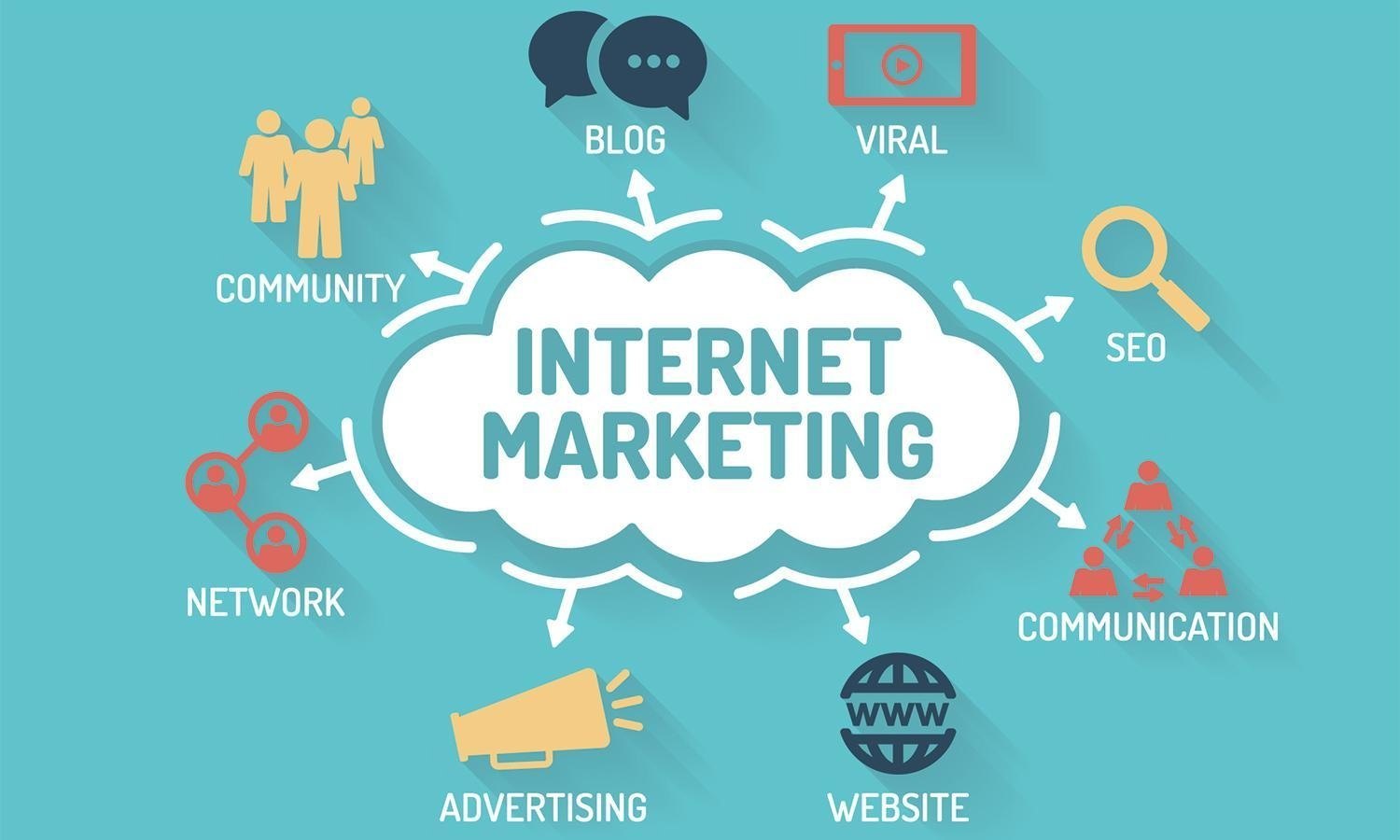

Artificial Intelligence (AI) is transforming how businesses connect with audiences online. From predicting customer behavior to automating campaign decisions, AI is redefining the structure and speed of internet marketing. Companies that adopt AI-driven strategies are gaining deeper insights, improving personalization, and responding faster to changing consumer expectations.
As digital competition increases, AI is becoming a practical necessity rather than a future possibility.
What Artificial Intelligence Means for Internet Marketing
Artificial Intelligence refers to systems capable of analyzing data, identifying patterns, and making decisions with minimal human intervention. In internet marketing, AI helps businesses interpret customer behavior and deliver relevant experiences at scale.
Common AI-powered marketing tools include:
- Predictive analytics platforms
- Chatbots and virtual assistants
- Content recommendation engines
- Automated email systems
- Smart advertising optimization tools
These technologies help marketers shift from guesswork to precision-driven strategies.
AI Enables Advanced Customer Behavior Analysis 📊
Understanding customers accurately has always been central to marketing success. AI improves this process by analyzing large volumes of data quickly and efficiently.
Businesses can use AI to:
- Identify browsing behavior trends
- Predict purchasing intent
- Detect engagement patterns
- Segment audiences automatically
- Track real-time interaction signals
This level of insight allows marketers to deliver more relevant campaigns.
Personalization at Scale Becomes Possible
Traditional personalization required manual effort and limited data. AI allows businesses to tailor experiences for thousands or even millions of users simultaneously.
AI-driven personalization supports:
- Dynamic website content adjustments
- Smart product recommendations
- Individualized email campaigns
- Location-based messaging
- Behavior-triggered notifications
Customers respond more positively to content that matches their interests and needs.
AI Improves Advertising Efficiency and ROI 🎯
Digital advertising platforms now rely heavily on AI algorithms to optimize performance automatically.
AI helps marketers:
- Select high-performing audience segments
- Adjust bids in real time
- Predict campaign outcomes
- Reduce wasted advertising spend
- Improve conversion rates
Smarter targeting ensures marketing budgets are used more effectively.
Chatbots Are Transforming Customer Interaction
AI-powered chatbots provide instant responses to customer questions at any time of day. These tools improve engagement without increasing support workload.
Businesses benefit from chatbots by:
- Offering 24/7 assistance
- Handling routine inquiries instantly
- Guiding customers through purchase decisions
- Collecting interaction data for analysis
- Reducing response delays
Fast support increases customer satisfaction and trust.
Predictive Analytics Supports Better Marketing Decisions 📈
Predictive analytics uses historical and behavioral data to forecast future customer actions. This helps businesses prepare strategies before trends fully develop.
Predictive insights allow marketers to:
- Anticipate customer needs
- Optimize campaign timing
- Identify high-value prospects
- Reduce churn risks
- Improve retention strategies
Forward-looking decisions create competitive advantages.
Content Creation Is Becoming Smarter with AI Assistance ✍️
AI tools are increasingly supporting content development by analyzing audience preferences and suggesting improvements.
AI can assist with:
- Topic recommendations
- headline optimization
- readability improvements
- keyword targeting insights
- performance forecasting
These enhancements help marketers produce content that resonates more effectively with readers.
Voice Search Optimization Is Expanding Marketing Opportunities 🎙️
Voice-enabled devices are influencing how users search online. AI plays a central role in interpreting conversational queries and delivering accurate responses.
Marketers are adapting by:
- optimizing for natural language phrases
- answering question-based search queries
- improving structured data usage
- focusing on conversational content formats
Voice search readiness strengthens digital visibility.
AI Strengthens Email Marketing Performance 📧
Email marketing remains highly effective, and AI is making it even more precise.
AI improves email campaigns by:
- predicting optimal send times
- customizing subject lines
- recommending relevant content
- segmenting audiences dynamically
- analyzing engagement behavior automatically
These improvements increase open rates and click-through performance.
Real-Time Marketing Adjustments Become Easier
Traditional campaigns required manual monitoring and adjustments. AI enables automated performance tracking and instant optimization.
Businesses can now:
- respond quickly to audience behavior shifts
- modify campaigns automatically
- test variations efficiently
- improve targeting continuously
- refine messaging strategies in real time
Faster adjustments lead to better results.
Ethical Data Use Will Shape Future AI Marketing Strategies 🔐
As AI capabilities expand, responsible data usage becomes increasingly important. Customers expect transparency and protection when sharing personal information.
Future-focused marketers prioritize:
- permission-based data collection
- secure storage practices
- transparent communication policies
- compliance with privacy regulations
Trust remains essential for long-term digital relationships.
FAQs About Artificial Intelligence in Internet Marketing
1. Can artificial intelligence replace human marketers completely?
No. AI supports analysis and automation, but human creativity, strategy, and emotional understanding remain essential in marketing decisions.
2. Is AI marketing technology expensive for small businesses?
Many AI-powered marketing tools now offer affordable subscription options designed specifically for small and growing businesses.
3. How does AI help improve customer retention?
AI identifies behavior patterns that indicate dissatisfaction or disengagement, allowing businesses to respond proactively with targeted retention strategies.
4. What industries benefit most from AI-driven internet marketing?
Retail, healthcare services, finance, education, hospitality, and technology sectors all benefit significantly from AI-powered marketing tools.
5. Does AI improve search engine optimization strategies?
Yes. AI tools analyze search trends, suggest keyword opportunities, and help marketers adapt content to evolving search behavior patterns.
6. Can AI help businesses identify new market opportunities?
AI analyzes customer behavior and industry trends to reveal emerging opportunities that may not be visible through manual research alone.
7. How should businesses start adopting AI in their marketing strategy?
Organizations can begin with automation tools for email campaigns, analytics platforms, or chatbot systems before expanding into predictive modeling and advanced personalization solutions.
Comments are closed.