

Paid advertising offers businesses something organic marketing cannot always provide immediately: the ability to reach potential customers quickly and control where budget is directed. However, speed also makes inefficient campaigns expensive very quickly. A paid media agency in Malaysia should therefore begin with the commercial objective, audience and measurement framework before deciding how aggressively to spend.
Start With What A Conversion Is Worth
Advertising budgets make more sense when they are connected to the economics of the business. A company selling a high-value professional service may be comfortable paying substantially more for a qualified enquiry than an ecommerce business earning a small margin on each order. Applying the same cost-per-lead expectations to both would make little sense.
This is why campaign planning should start with the outcome. The business needs to understand what it wants advertising to generate and roughly what that result is worth. Once those numbers are clearer, budgets and bidding strategies can be judged against a commercial target rather than a generic benchmark.
Lead quality matters here as well. A campaign may appear successful inside an advertising platform because it generates a large number of form submissions, but those enquiries may turn out to be irrelevant when the sales team speaks to them. Feeding that information back into campaign decisions is essential if the objective is profitable growth rather than attractive platform statistics.
Targeting Should Reflect Different Levels Of Intent
Not everyone reached through paid media is equally close to making a decision. Someone searching directly for a specific service is behaving differently from somebody reading general information about the subject. Campaign structure should recognise those differences rather than treating every click as interchangeable.
Search advertising can capture people already expressing demand, while other paid channels may introduce the brand earlier in the journey. Both can be useful, but they should have appropriate messages and expectations. A prospect discovering a business for the first time may need more explanation than someone actively comparing providers.
Landing pages need to continue that same journey. Sending a highly specific advert to a generic homepage forces the visitor to start searching for information again. A focused page that immediately reflects the advert makes the next step much clearer and usually gives the business a better chance of converting the paid traffic it has already bought.
Tracking Has To Reflect Genuine Business Outcomes
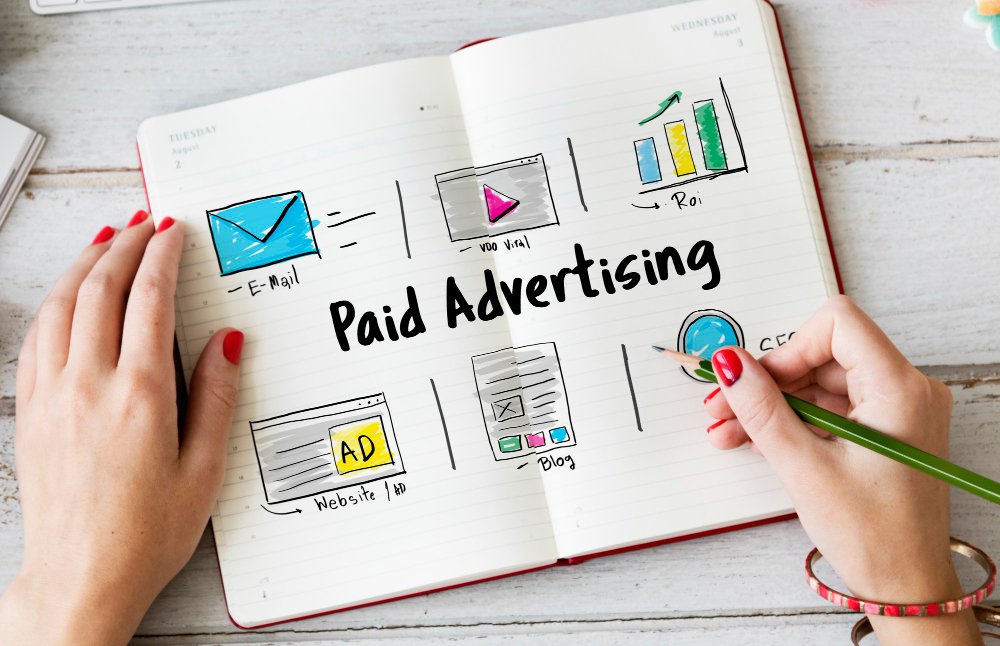
Modern advertising platforms increasingly rely on automated optimisation. That can be powerful, but only when the system is given accurate information about what success looks like. If weak actions are counted as important conversions, automation may simply become more efficient at finding people likely to perform those weak actions.
Businesses should therefore be selective about what they optimise towards. Completed purchases, genuine enquiry forms and meaningful telephone calls are very different from page views or accidental button clicks. The conversion setup should reflect that hierarchy.
Where possible, marketing data should also connect with information from the sales process. Knowing that a campaign generated 30 leads is useful, but knowing that ten were qualified and three became customers gives a much clearer picture of performance. This feedback allows budgets to shift towards activity that produces business rather than just platform activity.
Strong Campaigns Improve Through Controlled Testing
Paid media should evolve as new information becomes available. Search terms can reveal irrelevant traffic that needs excluding, advert tests can expose stronger messages and landing-page behaviour can show where visitors are dropping out. The campaign becomes more efficient when these observations lead to measured changes.
That does not mean altering everything every few days. Automated systems and tests need enough data to produce meaningful results. Constant interference can make performance harder to interpret rather than easier.
The better approach is structured improvement. Identify a problem, make a sensible change and assess the result. Over time, this produces a campaign built around real customer behaviour rather than the assumptions made on the day it was launched.
Comments are closed.